Week #1 - The Mystery Hidden for Ages
Blog Series Intention Recap
This May series explores a truth Paul calls a mystery: something God planned before the ages, held back in earlier generations, and now made known. The Church was not an afterthought, nor a waiting room until God returns to His plan for Israel. It was formed in Messiah from believing Jews and Gentiles, and it has real purposes now, among them displaying God's wisdom even to the unseen world.
This series is not written to win an argument about Israel and the Church. It is written to help believers see what Scripture says God has done, understand why He has placed us here, and respond with gratitude and humility. We start with the mystery, move to what God formed, ask what that means for how we live, and end where Paul does: with humility before God's faithfulness to Israel.
This page is a post in the series “The Church: A Mystery Revealed.” Click here to see the rest of the posts.
Let’s jump into Week #1:
“The Mystery Hidden for Ages”…
When most of us hear the word mystery, we think of a puzzle: something hidden that we are supposed to figure out. Paul uses the word differently. For Paul, a mystery is not a riddle to be solved. It is a truth God kept unrevealed until the moment He chose to make it known. So when Paul calls something about the Church a mystery, he is not saying it is hard to understand. He is pointing to something specific that was hidden for ages and has now been revealed.
But if God had already promised that the nations would be blessed, what exactly had been hidden? That question matters because the answer changes how we understand both the Church and Israel. This post looks at the Church in Ephesians 3 to find out.
Why it Matters:
A biblical mystery is a truth God withheld until the appointed time and then revealed. We receive it from Scripture, not from speculation.
The Church was not an afterthought. Paul says the plan was “hidden for ages in God” and calls it God’s “eternal purpose.”
What was hidden was not that Gentiles would be blessed. The Old Testament already promised that. What was hidden was that believing Jews and Gentiles would be united as one body in Messiah.
This mystery does not cancel God’s promises to Israel. Paul, who unveils it, is the same apostle who writes of Israel with grief and hope.
Go Deeper:
What Does Paul Mean by “Mystery”?
The Greek word is mystērion, and Paul uses it again and again: in Romans 11:25 and 16:25–26, Ephesians 1:9, 3:3–9, 5:32, and Colossians 1:26–27. In each place, it points to something God has now disclosed.
Bible teacher Dr. Arnold Fruchtenbaum, whose teaching shapes this series, describes a biblical mystery as a truth not revealed in the Old Testament but disclosed in the New. That does not mean the Old Testament said nothing related to it. As we will see, it clearly anticipated Gentile blessing. What it did not reveal was the particular truth Paul identifies here: believing Jews and Gentiles joined together as equal members of one body in Messiah.
The idea of a God who reveals what is hidden is not new to Paul. Long before, Daniel told a pagan king:
“There is a God in heaven who reveals mysteries” (Daniel 2:28, ESV)
Daniel had already established the pattern: God reveals mysteries. Paul now tells us what God had chosen to reveal.
Was Gentile Salvation the Mystery?
It's easy to read “mystery” and assume the secret is that Gentiles could be saved. It is not. God told Abraham:
“and in you all the families of the earth shall be blessed.” (Genesis 12:3, ESV)
Isaiah heard the Lord say to His Servant:
“I will make you as a light for the nations, that my salvation may reach to the end of the earth.” (Isaiah 49:6, ESV)
Isaiah 56:6–8 speaks of foreigners joining themselves to the Lord, and Paul himself draws on the Old Testament in Romans 9–11 to show that the blessing of the Gentiles was foreseen. The Old Testament hinted, and even promised, that the nations would be blessed.
Think of one piece of a puzzle laid on the table. The Old Testament clearly put that piece down: God’s blessing would reach the nations. What had not yet been revealed was the picture that piece belongs to: believing Jews and Gentiles joined together in one body in Messiah.
The Church was no surprise to God. Paul speaks of “the plan of the mystery hidden for ages in God” (Ephesians 3:9, ESV). Hidden in God means the plan was never missing from His mind. He withheld it from human knowledge until He chose to reveal it.
So What Was Hidden?
Paul tells us in Ephesians 3:
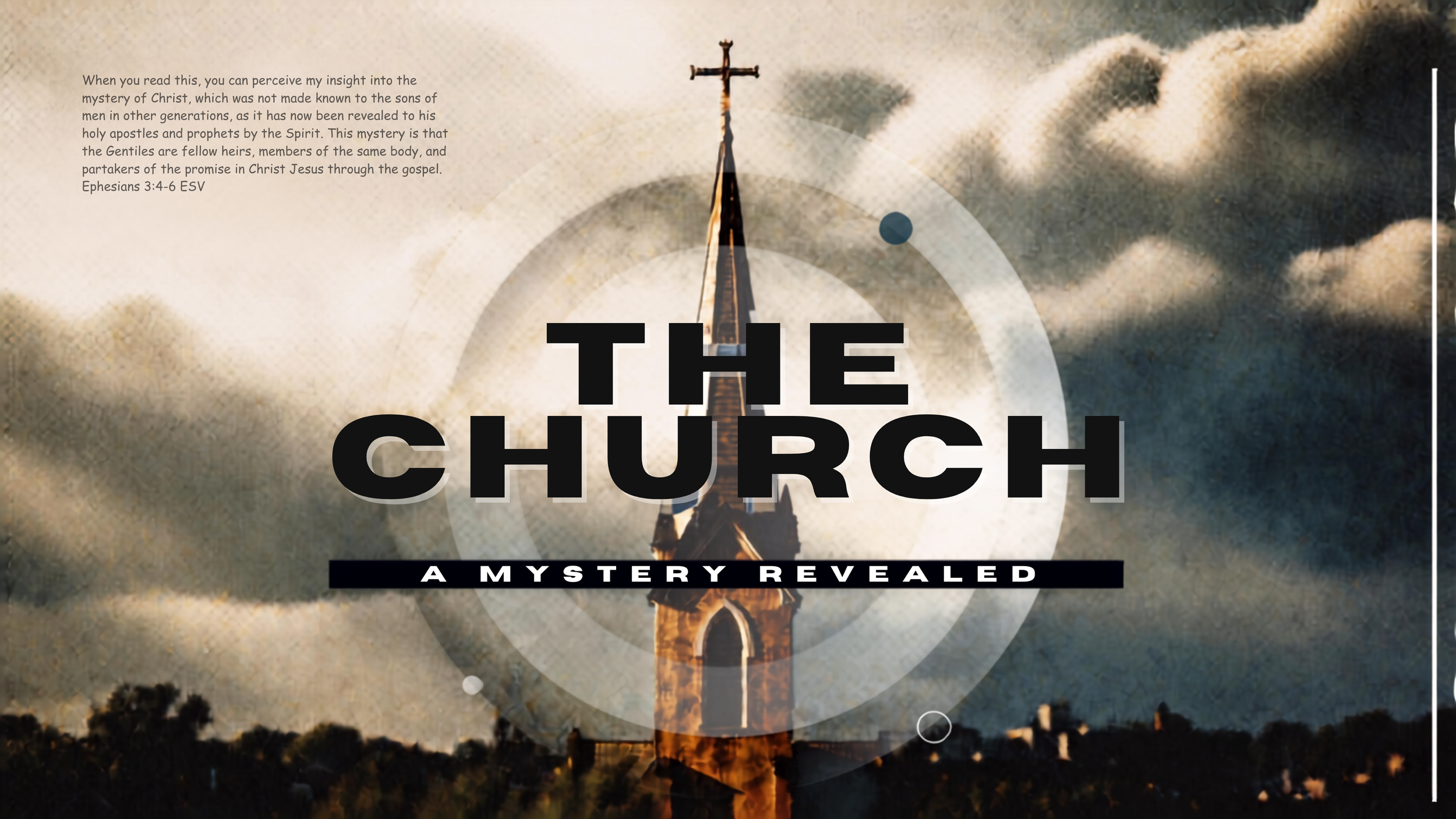
“When you read this, you can perceive my insight into the mystery of Christ, which was not made known to the sons of men in other generations as it has now been revealed to his holy apostles and prophets by the Spirit. This mystery is that the Gentiles are fellow heirs, members of the same body, and partakers of the promise in Christ Jesus through the gospel.” (Ephesians 3:4–6, ESV)
Look at the three descriptions Paul piles up: fellow heirs, members of the same body, partakers of the promise. In Greek, all three begin with the same prefix, sun-, meaning “together with.”
The mystery is a togetherness.
Believing Gentiles are not sent to a separate line, and they do not become Israel. They stand alongside believing Jews as equal members of one body, fellow heirs and fellow partakers of the promise in Messiah through the gospel.
Paul gives us another dimension of this mystery in Colossians:
“the mystery hidden for ages and generations but now revealed to his saints. To them God chose to make known how great among the Gentiles are the riches of the glory of this mystery, which is Christ in you, the hope of glory.” (Colossians 1:26–27, ESV)
Here the focus moves from the shape of the body to the presence at its center: Yeshua (Jesus), the Messiah, dwelling in His people, Gentiles included.
This distinction matters. The mystery Paul identifies here is not simply the Church's existence, but its previously unrevealed composition: believing Jews and Gentiles united in one body in Messiah.
How Was the Mystery Revealed?
The mystery was not discovered by clever readers piecing together Old Testament clues. Paul says it “was made known to me by revelation” (Ephesians 3:3, ESV) and revealed, “to his holy apostles and prophets by the Spirit” (Ephesians 3:5, ESV). God had kept it hidden, and God chose the moment and the messengers through whom He would make it known.
Romans 16:25–26 describes the same movement: what was “kept secret for long ages” has now been “disclosed.”
Why Did God Reveal It?
Paul does not stop at the content. He gives the purpose:
“so that through the church the manifold wisdom of God might now be made known to the rulers and authorities in the heavenly places. This was according to the eternal purpose that he has realized in Christ Jesus our Lord” (Ephesians 3:10–11, ESV)
Through the Church, God displays His wisdom even in the heavenly realm. When Jew and Gentile stand together as one body under one Head, the unseen world watches God’s wisdom at work. And note the phrase again: “eternal purpose.” This was never Plan B.
This is only one of the purposes Scripture gives for the Church. Others include gathering a people for God’s name from every nation and bringing Him eternal glory. We will come back to those purposes later in this series. But even this first purpose answers a question worth asking now: is the Church just filling time until God turns His attention back to Israel? No. God is displaying His wisdom to the unseen world now, in this age, through this Church. That is not an interval. That is purpose.
How does this help me understand “The Church: A Mystery Revealed”?
Neither an Afterthought nor a Replacement
Two misreadings are common, and Paul’s words answer both.
The first says God turned to the Church only because Israel said no, as if the Church were an emergency measure. But Paul says the plan was “hidden for ages in God” and rooted in an “eternal purpose.” God was not caught off guard.
The second says the Church has taken Israel’s place. But look at what Paul actually says in Ephesians 3: Gentiles are fellow heirs, members of the same body, partakers together. Ephesians 3 describes inclusion, not replacement. And when Paul addresses Israel directly in Romans 11, he warns Gentile believers against arrogance and writes that “the gifts and the calling of God are irrevocable” (Romans 11:29, ESV). Tellingly, he uses the word mystery again in Romans 11:25, this time about Israel. The series comes back to that verse in Week 4.
Receiving It with Gratitude
Paul does not tell us this to make us proud. The apostle who received the revelation calls himself “the very least of all the saints” (Ephesians 3:8, ESV). If you are a Gentile believer, this passage tells you that you were not an afterthought or a guest at the edge of God’s plan. You were included by grace in a purpose older than creation, and that purpose is already at work through you, wherever you live. If you are a Jewish believer, it tells you that the body you belong to now holds Gentiles beside you, by the same grace. Either way, the response is the same: wonder, gratitude, and humility.
That should change the way we look across the aisle on Sunday morning — whether that gathering happens in a sanctuary, a rented room, a home, or under a tree. The Church is not a collection of people who naturally belong together. It is a people God has brought together in Messiah.
This week, read Ephesians 3 and Romans 11 side by side. Ask two questions: What has God done in forming the Church? And what does Paul say about God’s faithfulness to Israel? Resist the temptation to make one answer erase the other. Gentiles have been brought near. Jews and Gentiles have been made one body in Messiah. God’s purposes for Israel have not disappeared. Understanding this mystery should not make us think less about Israel. It should make us more careful to understand the place God has given both in His plan, and why He has placed us here.
The Church was in God's mind before the ages.
What was hidden is now revealed.
Jew and Gentile. One body. One Messiah.