Book of the Month - June 2026
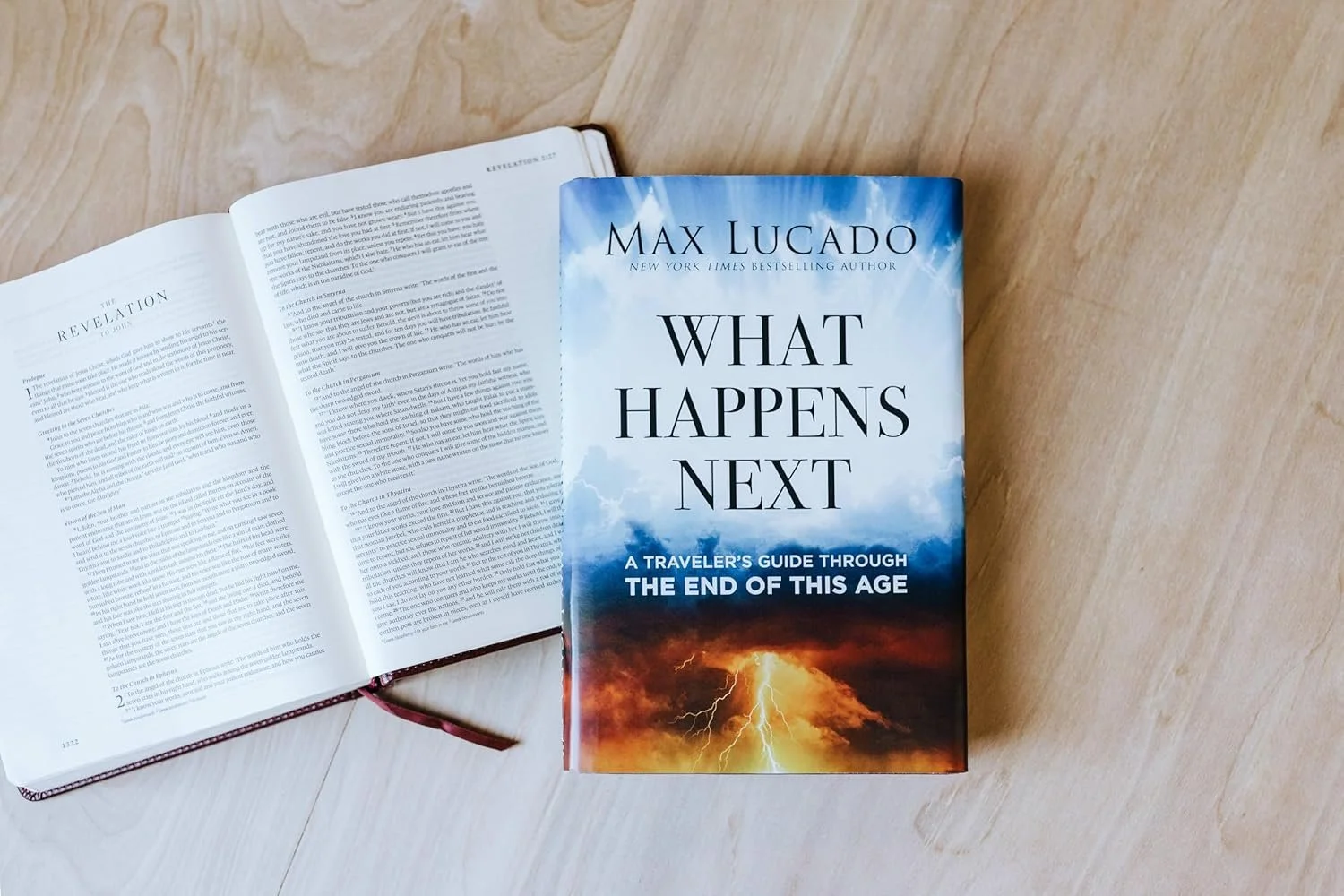
What Happens Next: A Traveler’s Guide Through the End of This Age
Max Lucado - ISBN: 978-1400260003 - 2024
Author:
Max Lucado
Max Lucado is a pastor, speaker, and bestselling author who, in his own words, “writes books for people who don’t read books.” He serves the people of Oak Hills Church in San Antonio, Texas, and his message is for the hurting, the guilty, the lonely, and the discouraged: God loves you; let him.
Max is known for combining poetic storytelling and homespun humor with the heart of a pastor. All of his trade books began as sermon series at Oak Hills Church, and his sermons all begin with Max asking himself this question: “What can I say on Sunday that will still matter on Monday?” He’s been dubbed “America’s Pastor” by Christianity Today, and “The Best Preacher in America” by Reader’s Digest.
Max and his wife Denalyn live in San Antonio, Texas. They have three grown daughters, three sons-in-law, and four grandchildren.
Brief Synopsis:
Be Prepared, Not Scared
Are we living in the end times? If so, what does that mean for you?
In contrast to the confusion and anxiety that often comes with this topic, Max Lucado believes God wants us to be prepared, not scared; informed, not intimidated. He writes: "The future is not frightening if you know the future. And you can know the future when you know who holds it."
What Happens Next is an optimistic, accessible, and nonsensational guide to what the Bible says about heaven's time line that will empower you to face the future with faith. Max takes you on a well-researched overview of what God's Word says, exploring the following four big ideas that provide a solid foundation for understanding God's eternal plan:
We were made to reign with Christ.
God has made and will keep his promises.
Heaven has a time line.
A golden era-the millennium-awaits God's children.
Plus, Max takes you on a journey of the time line of history, examining essential milestones such as the rapture, the seven years of tribulation, and the glory of heaven.
Whether you find yourself in the "I can't wait," "I'm almost ready," or "I'm not sure about all of this" camp, you will be encouraged to ponder God's promises for the future.
In Max's signature encouraging style, he reminds us, "It's all about hope. It's all about him."
Insights:
“in my Bible that precedes the book of Revelation: “When the plain sense of Scripture makes common sense, we will seek no other sense.” I don’t know who first set forth that rule, but I like it. The plainest reading of Revelation 20 is a literal thousand-year reign. John mentions it six times in seven verses: Satan is bound “for a thousand years” (v. 2). Satan could not deceive “until the thousand years were ended” (v. 3). Saints “reigned with Christ a thousand years” (v. 4).”
“Prepared Hard times are coming. The Antichrist, the tribulation, the abomination that causes desolation—these are foreboding events. But if you are in Christ, you won’t have to experience them. God will come for his church before the dark days begin. That event is commonly called the rapture. Jesus, with the power of a king and the kindness of a savior, will extract his children prior to the seven years of evil.”
"Face the problems of this life by focusing on the promises of the next."
"Every page and promise of the Bible invites and excites with the lure of a new age and a renewed world. Your best life awaits you!"
Should I read it or skip it?
What Happens Next is exactly what I've come to expect from Max Lucado: A simple, solid look at the end times. I grew up reading Max Lucado’s books. His book, On the Anvil, shaped many of my ideas of serving God as a missionary. He has a way of taking subjects that many Christians find confusing and making them understandable without overwhelming them. The book keeps its focus on Jesus, God's faithfulness, and the hope believers have in Christ's return. If you've never spent much time studying prophecy, this is an easy place to begin.
The book's greatest strength is also its greatest limitation. Lucado keeps things simple, which means he doesn't spend much time working through some of the theological questions that sit beneath his conclusions. The book reads largely from a dispensational perspective, but the supporting framework is often assumed rather than explained. He discusses only 4 covenants rather than 8. That's not a criticism so much as a recognition of what the book is trying to accomplish. It's a good introduction that will leave you hopeful and eager to learn more. Just don't stop here. Let it point you back to Scripture and encourage you to keep digging for yourself.