

Danny’s Thoughts, Reviews, and Musings

Book of the Month - October

Philosophy in Bit-Sized Chunks
Lesley Levene - ISBN: 978-1-4351-6770-4 - 2017
Author:
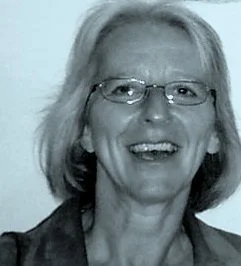
Lesley Levene
Lesley Levene studied archaeology and worked at the British Museum and the Institute of Classical Studies (UCL) before becoming a writer and editor. She is the author or I Think, Therefore I Am, also published by Michael O'Mara Books.
Brief Synopsis:
In Philosophy in Bit-Sized Chunks, Levene looks over the major historical eras of philosophy. She introduces us to the heavy hitters and tells their stories. She takes the sound bites of their most famous statements and starts each “bio” with them. For instance, to begin Socrates’ bio, she quotes, “The unexamined life is not worth living.” -quoted by Plato in his Apology. Each bio gives us the writings and briefly summarizes them in one to two chapters.
The Eras of Philosophy as Levene sees them:
The Presocratic Philosophers
The Greek Heavyweights
Enter the Romans
Christians, Muslims, and Just One Jew
Renaissance Men
The Age of Reason
The Age of Enlightenment
Into the Nineteenth Century
Modern Times
Insights:
The Meditations serve as a sort of Stoic self-help manual. For Marcus Aurelius, the ultimate aim in life is to live in harmony with the universe, of which all people are a part and to which they will all return. The way to achieve this is to ignore the distraction of worldly pleasures and aspire instead to self-control, which comes with the use of reason. More important than what people are is the way they behave, and they can train themselves to behave better by following Stoic principles. - pg. 56
Kierkegaard positioned himself firmly against the dominant German traditions of the day, in particular Hegel’s contention that life could be explained by intellect alone. He saw this as a misguided attempt to replace God by elevating man, despite all the limitations on man’s ability to make objective judgments. Instead, he focused on the importance of the individual, stressing the centrality of the will and of free choice. For Kierkegaard, where human action and judgment were concerned, subjectivity was all. He carried his philosophical approach over into his works against organized Christianity, which he referred to disparagingly as Christendom. Here he again stressed individual choice as opposed to blind acceptance of the rituals of the Danish Lutheran Church. - pg. 136
For Socrates, righteous living was the key. This included resisting the pursuit of fame and fortune and never, under any circumstances, returning evil for evil. The most important thing in life was to look after the moral welfare of one’s soul, as this was the route to true happiness. It was a very personal philosophy: once the meaning of the virtues had been clarified and understood, one could become an objectively better person, unswayed by ties to family and friends. - pg. 33
Should I read it or skip it?
This book contains several help items. For instance, a chapter dedicated to a dictionary of philosophical terms provides understanding to philosophical noobs (newbies). However, I had difficulty finding any biographical information on the author. Without this information, I have trouble deciding how her interpretation will lean. I am not concerned with left or right but more with an objective vs. subjective decision-making process. For instance, in the biography of Kierkegaard, I feel she makes conclusions that do not account for Kierkegaard's faith. She leads us to believe in a fight between Kierkegaard's view of Christianity and the Danish Lutheran Church. Research about how Kierkegaard views himself could show a different author how to interpret Kierkegaard's thoughts as less about individualism and more about a need to reform the church, especially since he waited until his father's priest died. If you read this book, be prepared to cross-reference the information and make sure you use a consistent interpretation process. Also, review the source material before you conclude Levene's interpretations are correct. Levene tends to summarize essential works in one paragraph. In my humble opinion, these summaries result in oversimplifying significant philosophical works.
Book of the Month - September
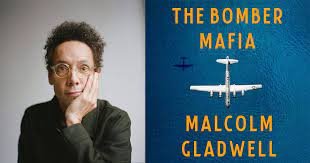
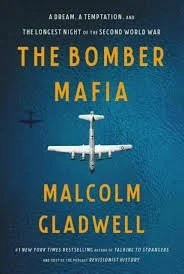
The Bomber Mafia
Malcolm Gladwell - ISBN: 978-0-316-29661-8 - April 2021
Author:
Malcolm Gladwell has been an interesting find in my life. Over the last few years, my kids and I have listened to his podcast, “Revisionist History.” They especially love the episode about McDonald’s fries. My daughter has dreamt of fries from the old days. He is the co-founder of Pushkin Industries and, at the time of this review, the author of five New York Times best-sellers. For an in-depth interview and a great way to get to know him, please click here to check out this video interview conducted by Carey Nieuwhof about his books and faith.
Brief Synopsis:
The Bomber Mafia opens the world of the Army Air Corp and the men who determined the original thoughts and culture. Originally designed to be an audiobook, the hard copy adds notes and insights not available when just listening to the story. In this book, Malcolm explores the development of napalm, the firebombing of Japan, and the men who asked, “What if pinpoint bombing could end wars faster and make them less lethal?”
“The genus of the Bomber Mafia was to understand that distinction - and to say: We don’t have to slaughter the innocent, burn them beyond recognition, in pursuit of our military goals. We can do better. And they were right.” - page 206.
Insights:
“The more you invest in a set of beliefs - the greater the sacrifice you make in the service of that conviction - the more resistant you will be to evidence that suggests that you are mistaken. You don't give up. You double down. As Festinger recalled in an oral history, "One of the things we expected would happen would be that after the disconfirmation of this prediction...they would...have to discard their belief, but to the extent that they were committed to it, this would be difficult to do.” - page 113
“Without persistence, principles are meaningless. Because one day, your dream may come true. And if you cannot keep that dream alive in the interim, then who are you?” - page 198
Should I read it or skip it?
I love Malcolm Gladwell’s writing and storytelling style. I also love military history. So, therefore, I think everyone should read the book. There are a few things I caution. You get two different experiences reading the book versus listening. So dependent on the type of learner you are, I think you can choose either experience.
Also, as a church leader, I find myself dealing with isolation from and relegation by our culture. The Bomber Mafia was ahead of its time. They dreamed of a day when the use of pinpoint bombing would enable a way to make the world safer. When technology caught up, pinpoint bombing became the way of the world. We no longer depend on analog sites to drop bombs. From GPS to laser targeting, we can drop an appropriately rated bomb and not see the collateral damage we would see 50 years ago. I think church leaders experience something similar. We have a message and belief which could change the world. However, due to our own actions and culture, we find ourselves isolated and irrelevant. Time will help because some cultural ideas will invalidate themselves with time. To become really relevant, we need something else, like the innovation of technology for The Bomber Mafia. I think Covid and its effect can be those things for us.

Books of the Month - August

Ranger’s Apprentice: The Early Years
John Flanagan - ISBN: 978-0-399-16361-6 & 978-0-399-16362-3 - 2015 & 2016
Author:
Taken from Good Reads and the Falangan Wiki
Brief Synopsis:
In his book, The Lost Stories, John Flanagan tells how Halt and Crowley, characters from the Rangers Apprentice Series, met. The lost stories fill out some lore, but Flanagan took it further and fleshed out some of these stories.
The Tournament at Gorlan - The tournament at Gorlan directly follows the events of Lost Story #11. Morgarath, a renegade lord, hates Halt and Crowley. He took over the kingdom and has been wreaking havoc throughout Araluen. Halt and Crowley set out to find the discredited Prince Duncan. They gather other Rangers and concoct a plan not only to rescue Duncan and his father, King Oswald but to reform the Ranger Corp into an available and viable reconnaissance force.
The Battle of Hackam Heath - Most Ranger’s apprentice fans know of this story. In Book 1 of the series, Will, Halt’s apprentice, has suspicions Halt was the Ranger who led an expedition to cripple Morgarath at the Battle of Hackam Heath. This book contains all sorts of Easter Eggs for the original series. It also gives us a look at the life Halt led before being Will’s master.
Flanagan usually does a two-part with cliff hanger. This technique tends to make me frustrated, and I refuse to read one until the other is out so I don’t have to stop. He does not do that here. These books tell a story related (they are in the same series), but they can be read stand-alone and flesh out two different time period’s even.
Insights:
“A wise man once told me, don’t believe anything you hear until you’ve seen it with your own eyes,” Halt said. Crowley looked up at him. “Who said that? Pritchard?” It sounded like the sort of thing their old mentor might say. Halt affected to think for a few seconds then gave a slight smile. “No. I think it was me, actually. I can be very wise at times.” ― John Flanagan, The Tournament at Gorlan, pg 27
“The Hibernian is right. You’re a good man, Samdash, but you’re too impulsive to be a good leader. You're impatient to get things done, and that leads to mistakes.” ― John Flanagan, The Tournament at Gorlan, pg. 183
“Life was good, he thought. They had eaten well. They had a firm plan of action, and he had a traveling companion whom he could tease anytime he liked.” ― John Flanagan, The Tournament at Gorlan, pg 70
“Halt nodded at him gratefully. "Exactly. We need to elect a leader - and give him the power to make decisions and the authority to have those decisions obeyed and carried through. Otherwise, we're like a band of headless chickens.” “But dangerous chickens nonetheless," Leander said with a faint smile. ― John Flanagan, The Tournament at Gorlan, pg 155
“I think the ground will be good enough,” he said. Then, turning to the nearest group of soldiers, he asked with a grin: “What do you say, men? Is the ground soft enough for a royal backside?” The soldiers chuckled. One of them, a grizzled veteran, rose and walked over to where Duncan and his two senior officers were standing. He made a show of inspecting the ground, brushing aside a few twigs and rocks, then spread out a none-too-clean neckerchief and gestured for the King to sit. “There you go, my lord. Your royal bum should be comfortable there.” The others nearby joined in the laughter. Duncan grinned at him. “If it’s not, I’ll have you in the stocks later tonight,” he said. “We did bring the stocks, didn’t we, Sir David?” “I’m sure we did, sir,” David answered gravely.” ― John Flanagan, The Battle of Hackham Heath, 231
“His method of making his way through the crowd was a simple one. He deviated neither to left nor right, but forged straight ahead, using his broad shoulders to clear a path. A pace behind him, his beautiful wife, Lady Sandra, followed in the space he cleared.” ― John Flanagan, The Battle of Hackham Heath, pg 21
Should I read it or skip it?
First, I love Flanagan’s work. They were written for his son, and the love shows through them. Second, I love the lessons of leadership Flanagan shares. The quotes above are meant to encourage you to check them out. An example from The Battle of Hackham Heath: Duncan realizes sharing hardship with his men will endear them to him. While the chapter goes on, we also see Duncan “napping” while the enemy is across the way. This response calms his men and allows them to be ready and collected when the battle begins. Weaving truth into a fun story brings forward a time-honored tradition. If you have boys, this series will be awesome for you to read with them. If you have girls, The Royal Ranger series might be a better place to start.

Book of the Month - July
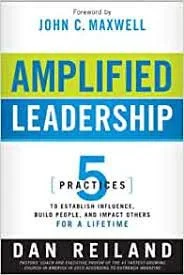
Amplified Leadership
Dan Reiland - ISBN: 978-1-61638-472-2 - 2011
Author:
Dan Reiland serves 12Stone Church as their executive pastor. Dan has closely worked with John Maxwell for over 20 years. He was John’s executive pastor at Skyline, where John served as lead pastor. Dan also served with John at INJOY as the vice president of Leadership and Church development. You can find more information at https://danreiland.com/.
Brief Synopsis:
Amplified Leadership comes from the mind of Dan Reiland. Many people in leadership roles do instead of lead. They get the role, and in an attempt to lead from the front, they end up just being doers. Dan presents a simple five-step process to replacing leading a team of leaders instead of leading a team of doers. Most leaders often lack this crucial trait, and their organization stays flat or flounders with one or two levels of leadership. They are not able to make the jump to the next level.
The five steps Dan brings to the table are as follows:
Establish a relationship
Engage a follower
Embrace a Team Member
Coach an Apprentice
Mentor a New Leader
He also breaks the steps into practical steps, which allow the readers to see where they are lacking and what they can do to take the leaps necessary to reach the next level.
Insights:
“Inspiring people to connect to the vision is at the core of a ministry’s mission and future success. But I hope you can see by now that being an inspiring leader inst about having a big personality. It’s about consistently doing the right things at the right time. Thankfully the art, skill, and passion needed to inspire others can be improved over the course of a lifetime. And the persistence to develop these skills is what will produce success.” - page 78
“Part of clearly communicating your expectations is making know the changes you want to see in two areas—in the leader and in the ministry. The first is the most important.” - Page 144
“When it comes to leadership development, much of it must come from another leader who gets in the trenches to show the way. Mentoring is not all done close-up because leaders can learn a lot from books, conferences, …. But without a mentor or two within physical proximity, the aspiring leader will not get the most out of the development process.” -168
Should I read it or skip it?
If your work requires teams to be effective, the answer is yes. If your ascent to the next level requires multiple levels of leadership, the answer is a great big yes.
I had the opportunity to meet Dan a few years ago. He is a humble and intelligent man who strives for excellence. I would highly recommend this book.

Book of the Month - June
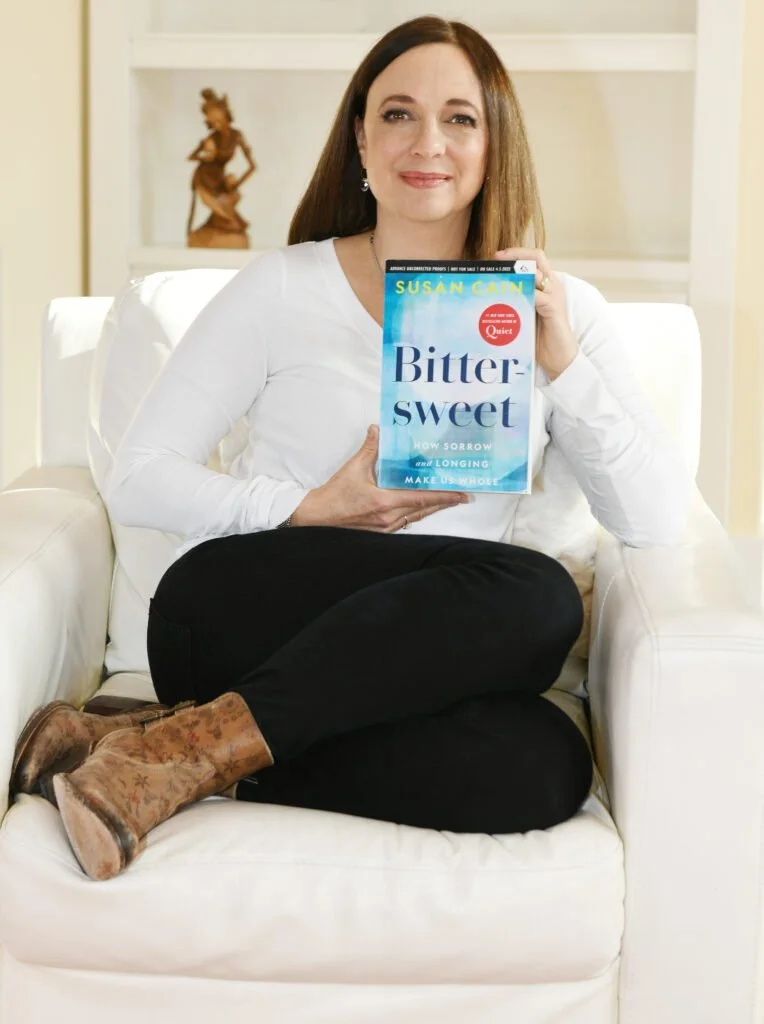
Bittersweet
Susan Cain - ISBN: 978-0-451-49978-3 - 2022
Author:
SUSAN CAIN is the #1 bestselling author of Bittersweet: How Sorrow and Longing Make Us Whole and Quiet: The Power of Introverts in a World That Can’t Stop Talking, which spent eight years on The New York Times best seller list, and has been translated into 40 languages. Susan’s TED talks have been viewed over 40 million times. LinkedIn named her the Top 6th Influencer in the World, just behind Richard Branson and Melinda French Gates. Susan partners with Malcolm Gladwell, Adam Grant and Dan Pink to curate the Next Big Idea Book Club. They donate all their proceeds to children’s literacy programs. Visit Susan at susancain.net.
Brief Synopsis:
Bittersweet explores the concepts of longing and sorrow. At one time, these attributes found in humans the ability to be treasured. Humans used them to power exploration, creativity, and insight. Susan decides to travel the road less taken and explore bittersweetness as a opportunity instead of a disease to be treated. From Leonard Cohen to the cellist of Sarajevo, from music to movies, from books to the sacred transcendence of literature, Susan journeys deep to find why everyone, at different levels, has this longing they need filled and can it make us whole.
Insights:
“This book is about the melancholic direction, which I call the “bittersweet”: a tendency to states of longing, poignancy, and sorrow; an acute awareness of passing time; and a curiously piercing joy at the beauty of the world. The bittersweet is also about the recognition that light and dark, birth and death—bitter and sweet—are forever paired. “Days of honey, days of onion,” as an Arabic proverb puts it.”
― Susan Cain, Bittersweet: How Sorrow and Longing Make Us Whole - pg. xxiii
“I’ve concluded that bittersweetness is not, as we tend to think, just a momentary feeling or event. It’s also a quiet force, a way of being, a storied tradition—as dramatically overlooked as it is brimming with human potential. It’s an authentic and elevating response to the problem of being alive in a deeply flawed yet stubbornly beautiful world. Most of all, bittersweetness shows us how to respond to pain: by acknowledging it, and attempting to turn it into art, the way the musicians do, or healing, innovation, or anything else that nourishes the soul. If we don’t transform our sorrows and longings, we can end up inflicting them on others via abuse, domination, and neglect. But if we realize that all humans know—or will know—loss and suffering, we can turn toward each other.”
― Susan Cain, Bittersweet: How Sorrow and Longing Make Us Whole
“But I believe that the grand unifying theory that explains the paradox of tragedy is (like most such theories) deceptively simple: We don’t actually welcome tragedy per se. What we like are sad and beautiful things—the bitter together with the sweet. We don’t thrill to lists of sad words, for example, or slide shows of sad faces (researchers have actually tested this). What we love is elegiac poetry, seaside cities shrouded in fog, spires reaching through the clouds. In other words: We like art forms that express our longing for union, and for a more perfect and beautiful world. When we feel strangely thrilled by the sorrow of “Moonlight Sonata,” it’s the yearning for love that we’re experiencing—fragile, fleeting, evanescent, precious, transcendent love. The idea of longing as a sacred and generative force seems very odd in our culture of normative sunshine. But it’s traveled the world for centuries, under many different names, taking many different forms.” ― Susan Cain, Bittersweet: How Sorrow and Longing Make Us Whole, pg 36
Should I read it or skip it?
I found Susan an episode of the Carey Nieuwhof podcast. I was going to take a cruise, and I decided this would be my cruise book. One of my biggest reasons for engaging with the material stems from Susan’s outlook as an agnostic. She is well-versed in many religions but doesn’t believe in any of the options. She finds a way to experience the sacred without experiencing Christ. She acknowledges the longing C.S. Lewis calls the God-shaped hole in our heart but misses the God who wants to fill it. She does an excellent job of redeeming the melancholy personality. In a society built on positivity and the over-the-top salesperson, those of us who possess a bittersweet bent often get relegated to the depressed and lonely. The truth lies in the ability to examine your life and then move forward.
I appreciated this take as I am a melancholy choleric personality. This book was also a more challenging read for me than other books. I tried both hard copy and listening. Be prepared to take on a challenge when you take up this book. Susan’s prose explains things, but she spends a lot of time chasing rabbit trails. Her writing reminds me of a pastor who wants to put all his research into his entire sermon, which is appropriate for a book but hard on the reader.
Book of the Month - May
Not In It To Win It
Andy Stanley - ISBN: 978—0-310-13892-1 - 2022
Author:
Communicator, author, and pastor Andy Stanley founded Atlanta-based North Point Ministries (NPM) in 1995. Today, NPM consists of eight churches in the Atlanta area and a network of 180 churches around the globe that collectively serve over 200,000 people weekly. A survey of U.S. pastors in Outreach Magazine identified Andy as one of the ten most influential living pastors in America.
Andy holds an undergraduate degree in journalism from Georgia State University and a master’s degree from Dallas Theological Seminary. He is the author of more than 20 books, including Better Decisions, Fewer Regrets; Irresistible; The New Rules for Love, Sex & Dating; How to Be Rich; Deep & Wide; Enemies of the Heart; When Work & Family Collide; and Visioneering. Taken from https://andystanley.com/about/.
Brief Synopsis:
Not In It To Win It illustrates the culture we are in right now. Republicans, Democrats, masks, no masks, vaccines, no vaccine, and the list goes on and on… Stanley gives the basis for this book as anything that puts one nation before God instead of under Him violates the mission Jesus gave us. He delves into the consequences of deciding to close Northpoint for a year, putting politics aside and attempting to minister to Republicans and Democrats, and giving a history of how we got to this point.
“But the church is not here to win. By every human measure, our Savior lost. On Purpose. With a purpose. And we are His body. We are not in it to win anything. We are in it for something else entirely. That something else is what this book is about.” - The back cover
Insights:
“When winning replaces following, we are no longer following. We are no longer Christian as defined by the folks who originally coined the term.” - page 17
“Our faith is anchored to a miscarriage of justice. The worst possible thing happened to the best possible person.” - page 182
“Saving America is not the mission of the church. The moment our love or concern for country takes precedence over our love for the people in our country, we are off mission. When saving America diverts energy, focus, and reputation away from saving Americans, we no longer qualify as the ekklesia of Jesus. We’re merely political tools. A manipulated voting demographic. A photo op. Again, we lose our elevated position as the conscience of the nation. We give up the moral and ethical high ground.” - page 15
“Let’s live, love, and lead in such a way that we, the ekklesia of Jesus, regain the moral high ground and can serve as the conscience of our nation. Let’s do what’s just, not what we can justify. Let’s do what’s responsible, not what’s permissible. Let’s do what’s moral, not what’s modeled. Let’s stop trying to win. Let’s forsake our fear of losing. Let’s fix our eyes and our lives on Jesus.” -page 217
Should I read it or skip it?
How far are you willing to open your mind? I have always believed pastors should not make their party affiliation known. We are citizens of heaven before we are citizens of America. We should take stands, but I think Andy’s book goes a step further. How do we oppose abortion without providing some support for those who choose life? Are you willing to be a follower, or are you wanting to just remain a believer?
Don’t read this book unless you expect to be challenged to be a Christ-follower more than an American.
Book of the Month - April
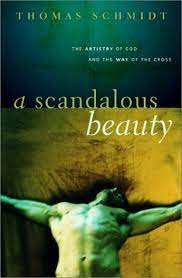
a scandalous beauty
Thomas Schmidt - ISBN: 9781587430176 - 2002
Author:
Thomas Schmidt has served as a professor at both religious and secular institutions. When the book was published he was the director of the Westminister Institute. According to Wipfandstock.com, he received his Ph.D. from Cambridge. He also currently lives in Vermont where he also teaches.
Brief Synopsis:
The book, a scandalous beauty, reads a little differently from most books. Thomas Schmidt wrote each chapter as a standalone easy. This fact means you can jump into the book at any point. From the first chapter on the Christian 4 letter word to the chapter on death and power, each essay holds truth and not one chapter disappoints the reader. Schmidt uses imagination mixed with a little bit of sarcasm for the chapter where Jesus goes to therapy. Schmidt’s vivid prose and historical knowledge combine to address Mark’s recounting of the crucifixion in comparison to the Roman procession for the Emperor. He finishes the book with an exploration of eternity and “God’s restoration of order from human chaos and rebellion.”
Insights:
“What Luck. To end up on death row the very day that the person in the cell next to you happens to be the Savior of the world. Don’t you think the thief on the cross was the one thief in the world who would benefit from being at that place at that moment?” - pg. 15
“Psychiatrist: When did you begin to sense confusion and hostility from people, and how did that make you feel?
Jesus: It wasn’t the common people who objected; it was the religious leaders. They wanted to please God by making and following perfect rules. AS soon as I began to teach and to heal, they believed that I was breaking their rules and offending God.” - pg. 54
“God save us from communion bread disguised by silver platters and lace doilies. We eat raw chunks of him together, or we die alone. The words of Jesus (eat my flesh and drink my blood) and the thoughts behind them are too grisly and too deep and too unsafe for a disciple to invent. Jesus clearly thought that people could only thrive in this life if they joined together continually for this relentless absorption of him, piece by piece.” - pg. 98
Should I read it or skip it?
Dr. Ken Huggins taught me most of what I know about the New Testament. He taught Survey of the New Testament at the Logsdon Seminary extension campus I attended. On a whim, he recommended this book to our class. Ever since he told us about it, this book landed and stays on my every Easter Read list. I love the essay format which means I don’t have to read every chapter every year. The scholarship and the broadness of the topics make this book one I hand out copies to people I love as Easter gifts. This book is definitely a must-read.

Book of the Month - March
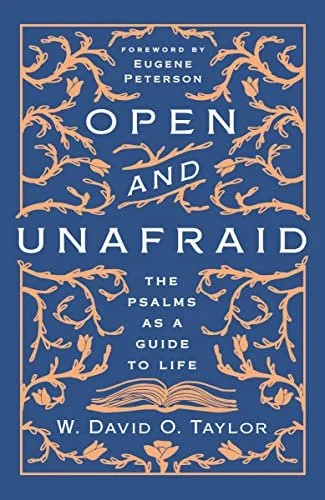
Open and UnAfraid: The Psalms as a Guide to Life
W. David O. Taylor - ISBN: 978-1-4002-1047-3 - 2020
Author:
David Taylor is a theologian, author, speaker, priest, and director of initiatives in art and faith. A professor at Fuller Theological Seminary, he has lectured widely on the arts, from Thailand to South Africa. He has written for The Washington Post, Image Journal, Theology Today, Worship, Religion News Service, Christianity Today, and Books & Culture, among others. He lives in Austin with his wife Phaedra, a visual artist and gardener, and his daughter Blythe and son Sebastian. - taken from https://www.wdavidotaylor.com/about
Brief Synopsis:
Open and UnAfraid brings the reader to a place of understanding of the Psalms. The book works to help the reader look at Psalms through different lenses. Taylor looks for themes among the Psalms and permits us to see them in a different light. The chapter names give you insight into how the book is structured, names as honesty, communication, death, justice, or creation. This book attempts to answer the question, “ How can we find a more transparent, resilient, and fearless life of faith? Look to the Psalms.” The books of the law given by Moses came to humans as five books. For centuries, man’s answer was the five books of the Psalms. The Psalms provide insight into how to talk with God and live in an open relationship with him. Taylor takes us on that journey.
Insights:
“What the psalms offer us is a powerful aid to un-hide: to stand honestly before God without fear, to face one another vulnerably without shame, and to encounter life in the world without any of the secrets that would demean and distort our humanity” - page 2
“One of the most striking things about these lament psalms is that they include the interrogation of God. This, as it turns out, is a divinely approved form of address. Psalm 121:4 confesses that the Lord is the one who neither sleeps nor slumbers but watches over us. But in Psalm 44:23, the psalmist dares to say, “Awake, Lord! Why do you sleep? Rouse yourself! Do not reject us forever” (NIV). Here, the psalmist sounds like Elijah, who taunts the priests of the god Baal: Shout louder! . . . Surely he is a god! Perhaps he is deep in thought, or busy, or traveling. Maybe he is sleeping and must be awakened. (1 Kings 18:27 NIV) Is this the way one speaks to the Maker of heaven and earth? Is this how you talk to the Holy One? Is this how we ought to address the Sovereign God? According to the psalmist, the answer is, at times, yes.” - page 72
“The psalmists see structural injustice within society, where Christians, perhaps especially evangelicals in the West, may see only personal guilt. The psalmists see the wickedness that pervades institutions and cultures, while Christians may see only the need for the forgiveness of individual sins.
The psalmists see powerless people who are oppressed by the powerful, and so they pray for justice (Pss. 37; 82; 11); Christians see only Psalm 51 with its plea for mercy. Writes C. S. Lewis, "Christians cry to God for mercy instead of justice; they [the psalmists] cried to God for justice instead of injustice."
It isn't that mercy and justice are opposed in the Psalter; they belong together intimately and integrally. But while many Christians give justice half the attention they give to mercy, the Psalter devotes twice as much space to justice as it does to mercy. This is not because mercy matters less than justice but because a world that violates justice violates God's fundamental purposes for that world.” - page 124
Should I read it or skip it?
If you are looking for a better way to understand how to use the Psalms in your everyday life, this is your book. Taylor takes a moment to tell you what this book is not. He does not intend this book to discuss authorship or the date of writing each Psalm. He intends this book to give us a new appreciation for understanding Psalms instead of dissecting them. I chose this book for my Old Testament Students to read. I would recommend it to you too.
Book of the Month - February
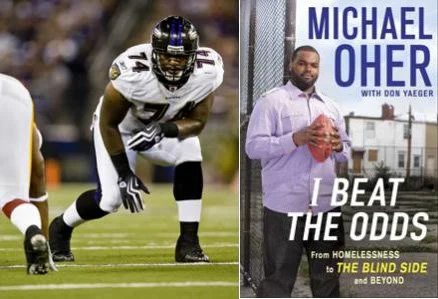
I Beat The Odds: From Homelessness to THE BLIND SIDE and Beyond
Michael Oher - ISBN: 978-1-592-40638-8 - 2011
Author:
Michael Oher played football for most of his life. He played in the NFL from 2009 to 2016 after being drafted by the Baltimore Ravens. Michael played left and right tackle during his career. Michael Lewis wrote “The Blind Side” about Michael and his extraordinary story of growing up in poverty, being taken in by the Tuohy family and finding his role in the offensive line. Michael has since retired after failing a physical following a nine month concussion protocol. I am sure he is concerned like most player about CTE. I cannot imagine how it feels to leave your profession and have to determine a new course in life so early.
Brief Synopsis:
Michael tells his story in his book, “I Beat The Odds.” This book recounts Michael’s childhood, adoption, college football career, and his draft day. The book also details the impact of the book and movie, The Blind Side, on his life. He also does a great job of revealing the world of the foster care system, his life in the projects of Memphis and how he overcame growing up in poverty.
Insights:
“Don't ever allow yourself to feel trapped by your choices. Take a look at yourself. You are a unique person created for a specific purpose. Your gifts matter. Your story matters. Your dreams matter. You matter.” - page 235
“People like to talk about "Cinderella stories," but Cinderella didn't get her happy ending without lifting a finger. She had to show up at the ball, be charming and smooth, and win over the prince. Of course she had help along the way, but ultimately it was up to her to make the fairy-tale ending happen.” - page 189
“It’s true that we can’t help the circumstances we’re born into and some of us start out in a much tougher place than other people. But just because we started there doesn’t mean we have to end there.” - page 235
Should I read it or skip it?
I chose this book for two reasons. First, I wanted to read it for Black History month. I felt like Michael’s knowledge of growing up in the poverty of the projects of Memphis and how the world around shaped his life would be a worthy read for Black History Month. Second, I wanted to get some insight into my son, Joshua. Like Michael, he plays offensive line. Josh lettered this last football season. As a sophomore, Josh played in every game both varsity and junior varsity. Josh and athletes like him are often a mystery to a band nerd and I thought I might get a glimpse of the competitive heart and understand him a little better. The offensive line is often a place without thanks. Normally, the only time you notice them is when something goes wrong.
I also think it important to acknowledge the impact of The Blind Side book and movie on Michael’s career. I will leave you to read how Michael believes it impacted him and whether he liked the movie and book. I think its important to see things through his eyes. Our race and our experiences can blind us to how he might have felt with the portrayal.

Book of the Month - January

The Post Quarantine Church
Thom Ranier - ISBN: 978-1496452757 - 2020
Author:
Thom Ranier served for many years as the CEO of Lifeway Christian Resources. More recently, he founded Church Answers and serves as CEO. He wants to bring health to churches and help them to work through difficult times. These last few years have seen huge challenges and hopefully, someone with 40 years of experience can help us all grow in a Post Quarantine environment.
Brief Synopsis:
Mr. Ranier identifies 6 Challenges and Opportunities for churches as we exit the quarantine caused by the COVID virus.
Gather Differently and Better
Seize your Opportunity to Reach the Digital World
Reconnect with the Community near Your Church
Take Prayer to a New and Powerful Level
Rethink your Facilities For Emerging Opportunities
Make Lasting Changes that will make a Difference
He takes each of these challenges and encourages church leaders with practical wisdom about how to use them as a springboard for the future.
Insights:
What if we asked the community how our church facilities could best serve them? - pg 17
At the core of many of these plans is a realization that churches must deal with three groups: what we’re calling digital only, digitally transitioning, and dual citizens. - pg 31
Two other early changes were obvious. First, more churches decided they could have worship services at times other than Sunday morning…Second, the online services that either began or were augmented during the quarantine are not going away. - pg 82
Should I read it or skip it?
I think this book provides a ton of insight in so few pages. At a little over 100 pages, Thom packs suggestions into every page and gives us a lot to consider. I think this would benefit every level. However, smaller churches might benefit more from reading together. Smaller or older churches tend to need encouragement in growing outside their norm. I think anyone would benefit from reading this book.