Week #1 - The Noise: Why Rightly Dividing the Word Matters
Blog Series Intention Recap
We live in an age where opinions are amplified, confidence is rewarded, and volume often replaces truth. Scripture, however, was never given to be shouted, weaponized, or reshaped to fit cultural preferences, but to be handled with care and obedience. In 2 Timothy 2:15, Paul reminds us that faithfulness to God requires disciplined work, not emotional reaction or popular consensus. Rightly dividing the Word means recognizing God’s distinctions, honoring His progressive revelation, and submitting to His authority rather than our instincts. When Scripture is mishandled, confusion spreads, and faith is unsettled, even when intentions are sincere. In a world that roars with competing voices, God calls His people to stand unashamed—approved by Him, grounded in truth, and courageous enough to handle His Word rightly.
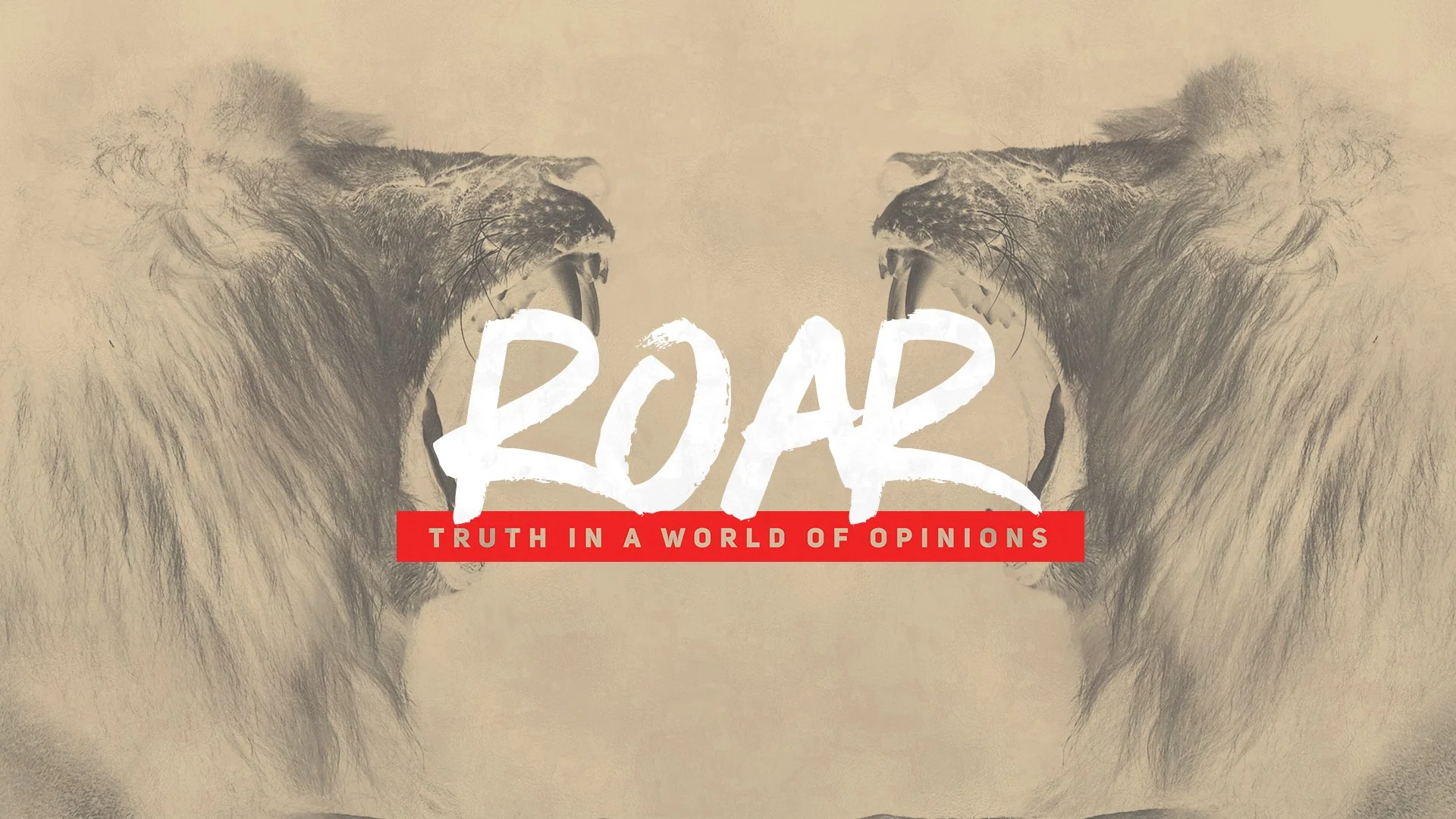
This page is a post in the series “ROAR - Truth in a World of Opinions.” Click here to see the rest of the posts.
Let’s jump into Week #1:
In a world filled with confident voices and endless interpretations, it’s easy to quote Scripture without truly handling it with care. Paul warns Timothy that careless words, distorted teaching, and even well-intended arguments can quietly damage faith rather than strengthen it. Passion and sincerity, while important, can never replace accuracy—especially when God’s distinctions in Scripture are ignored or blurred. Scripture is also misused when it becomes a weapon to win debates instead of a witness meant to form hearts and build stability. Rightly dividing the Word begins not with volume, dominance, or cleverness, but with reverence before God and discernment toward one another.
Why it Matters:
Noise is not new. False teaching has always surrounded God’s Word and often arises from within the church, not outside it.
Mishandled Scripture harms people. Doctrinal error spreads quietly but destructively, unsettling faith and distorting hope.
Sincerity does not equal truth. Passion without precision collapses God’s distinctions and confuses His promises.
Right division starts with reverence. Faithful handling of Scripture flows from accountability before God, not confidence before an audience.
Weaponized Scripture wounds instead of builds. When God’s Word is used to win arguments rather than shepherd people, pride replaces discernment and division replaces stability; rightly dividing the Word requires knowing the difference between correction and contention, clarity and combativeness, and essential truth and secondary disagreement.
Go Deeper:
Living in the Age of Noise
Text: 2 Timothy 2:14–18 (ESV)
Remind them of these things, and charge them before God not to quarrel about words, which does no good, but only ruins the hearers. Do your best to present yourself to God as one approved, a worker who has no need to be ashamed, rightly handling the word of truth. But avoid irreverent babble, for it will lead people into more and more ungodliness, and their talk will spread like gangrene. Among them are Hymenaeus and Philetus, who have swerved from the truth, saying that the resurrection has already happened. They are upsetting the faith of some.
We live in a loud age.
Every day we are surrounded by opinions—posted, shared, amplified, and repeated until confidence replaces clarity. Social media has taught us that the loudest voice often wins, that certainty is persuasive, and that nuance is unnecessary. Unfortunately, this cultural pattern has not stayed outside the church. It has followed us into our pulpits, classrooms, podcasts, and Bible studies.
Scripture is quoted constantly, but not always carefully. Verses are lifted from their context, promises are reassigned, commands are universalized, and warnings are ignored. Often this is done sincerely. Rarely is it done reverently.
The apostle Paul wrote to Timothy in a world that knew nothing of social media but everything about noise. Competing teachers, persuasive personalities, and confident voices filled the early church. Paul does not warn Timothy about silence. He warns him about careless words.
“Remind them of these things, and charge them before God not to quarrel about words, which does no good, but only ruins the hearers.” (2 Timothy 2:14, ESV)
This is where the call to rightly divide the Word begins—not as an academic exercise, but as a pastoral necessity. Before Paul instructs Timothy on how to handle Scripture well, he warns him about the danger of handling it poorly.
Rightly dividing the Word matters because mishandled Scripture harms people.
Noise Is Not New
One of the most dangerous assumptions we can make is that theological confusion is a modern problem. Paul reminds Timothy that noise has always surrounded truth. The early church was not protected by proximity to the apostles. False teaching arose early, spread quickly, and often came from within.
Paul names two men—Hymenaeus and Philetus—not to shame them publicly, but to warn Timothy privately. These were not outsiders mocking Christianity. They were teachers claiming to represent it.
“…who have swerved from the truth…” (2 Timothy 2:18a, ESV)
Notice the language. They did not abandon truth outright. They swerved. The image is subtle but important. Error rarely announces itself as error. It drifts. It slides. It slightly redirects the road.
Most theological error begins with Scripture, not apart from it. That is why it is so persuasive. A verse is quoted. A phrase is emphasized. A theme is isolated. But Scripture is no longer handled as a unified, progressive revelation. Instead, it becomes a collection of usable fragments.
Paul’s concern is not that people are debating theology. His concern is that they are quarreling about words in ways that do no good.
“…which does no good, but only ruins the hearers.” (2 Timothy 2:14b, ESV)
Noise does not build faith. It destabilizes it.
Mishandled Scripture Causes Real Damage
Paul does not treat false teaching as a harmless disagreement. He uses language that is intentionally severe.
“Their talk will spread like gangrene…” (2 Timothy 2:17a, ESV)
Gangrene does not announce itself loudly. It spreads quietly, infecting healthy tissue until damage becomes visible. By the time it is obvious, the cost is high.
This is how doctrinal error works in the church. It often begins with small shifts:
A future promise is pulled into the present
A command to Israel is applied directly to the Church
A warning meant for a specific context is universalized
A narrative is treated as normative instruction
These moves may seem minor, but they reshape how believers understand God, salvation, obedience, and hope. Paul is clear about the outcome: faith is unsettled.
“…they are upsetting the faith of some.” (2 Timothy 2:18b, ESV)
This is why rightly dividing the Word is not optional for leaders. It is not reserved for scholars. It is a matter of stewardship. Scripture does not belong to us. We are entrusted with it.
When the Word is mishandled, people suffer. Assurance erodes. Confusion grows. Confidence in God’s promises weakens. And often, those harmed do not know why they feel unsettled—they only know something is off.
Sincerity Cannot Replace Accuracy
One of the most persistent myths in Christian culture is that sincerity makes teaching safe. Paul dismantles that assumption.
Hymenaeus and Philetus were almost certainly sincere. They believed what they taught. But belief does not sanctify error.
Their specific error was doctrinal and eschatological:
“…saying that the resurrection has already happened.” (2 Timothy 2:18a, ESV)
This teaching collapsed a future event into the present. It redefined Christian hope. And it destabilized believers who were still waiting for what God had promised.
From a dispensational perspective, this is a critical issue. Scripture unfolds progressively. God reveals truth over time. Promises are given, clarified, postponed, and fulfilled according to His plan—not human expectation.
When distinctions are ignored—between Israel and the Church, between promise and fulfillment, between present experience and future hope—confusion is inevitable.
The Bible was written for us, but not all of it was written to us.
When that distinction is lost, Scripture becomes a tool for reinforcing personal views rather than a revelation to be received with humility.
Rightly Dividing the Word Begins With Reverence
Before Paul instructs Timothy on technique, he emphasizes accountability.
“Charge them before God…” (2 Timothy 2:14a, ESV)
This is courtroom language. Timothy is not merely a teacher. He is a steward who will give an account. Scripture is not handled before an audience alone—it is handled before God.
This is why rightly dividing the Word begins with reverence, not cleverness.
We live in a time when Bible teachers are rewarded for originality, speed, and certainty. But Scripture calls for something slower and heavier. It calls for careful handling.
Later in this same chapter, Paul will describe the goal:
“Do your best to present yourself to God as one approved…” (2 Timothy 2:15a, ESV)
Approval comes from God, not platforms. Faithfulness is measured vertically before it is ever measured horizontally.
Truth does not need to roar—but it must be handled rightly.
Weaponized Scripture Wounds Instead of Builds
One of the clearest warnings in this passage is Paul’s command not to quarrel about words. Scripture can be misused not only through ignorance but through pride.
When Scripture becomes a weapon rather than a witness, it loses its formative power. Arguments may be won, but people are not built up.
Paul is not advocating silence. He is advocating discernment. There is a difference between defending truth and fueling division.
Rightly dividing the Word requires recognizing:
The difference between essential doctrine and secondary disagreement
The difference between correction and contention
The difference between clarity and combativeness
The goal is not to dominate conversations, but to shepherd people toward stability in God’s truth.
How does this help me understand the concept of “ROAR - Truth in a World of Opinions”?
Why This Matters Now
The modern church faces an unprecedented volume of theological input. Podcasts, social media clips, online sermons, and viral quotes shape belief faster than careful study ever has.
This makes the call to rightly divide the Word more urgent, not less.
When believers are trained to recognize context, audience, and progressive revelation, they become resilient. They are not easily shaken by confident voices or trending interpretations.
But when discernment is neglected, faith becomes fragile. Believers are unsettled not because Scripture is unclear, but because it has been handled carelessly.
Paul’s concern for Timothy’s congregation mirrors our own moment. Noise does not disappear with time. It multiplies.
Setting the Tone for the Series
This first week of ROAR is intentionally weighty. Before we learn how to rightly divide the Word, we must feel the danger of failing to do so.
Paul’s warning is pastoral, not theoretical. The stakes are high because people are involved. Faith is involved. God’s reputation is involved.
Next week, we will look at Paul’s shift from warning to instruction. He will show Timothy what faithful work with Scripture actually looks like.
But before technique comes posture.
Scripture must be handled with humility, reverence, and care—because it is the Word of the living God.
“Let everyone who names the name of the Lord depart from iniquity.” (2 Timothy 2:19b, ESV)
Rightly dividing the Word begins here: not with volume, but with fear of the Lord.