Book of the Month - September 2026
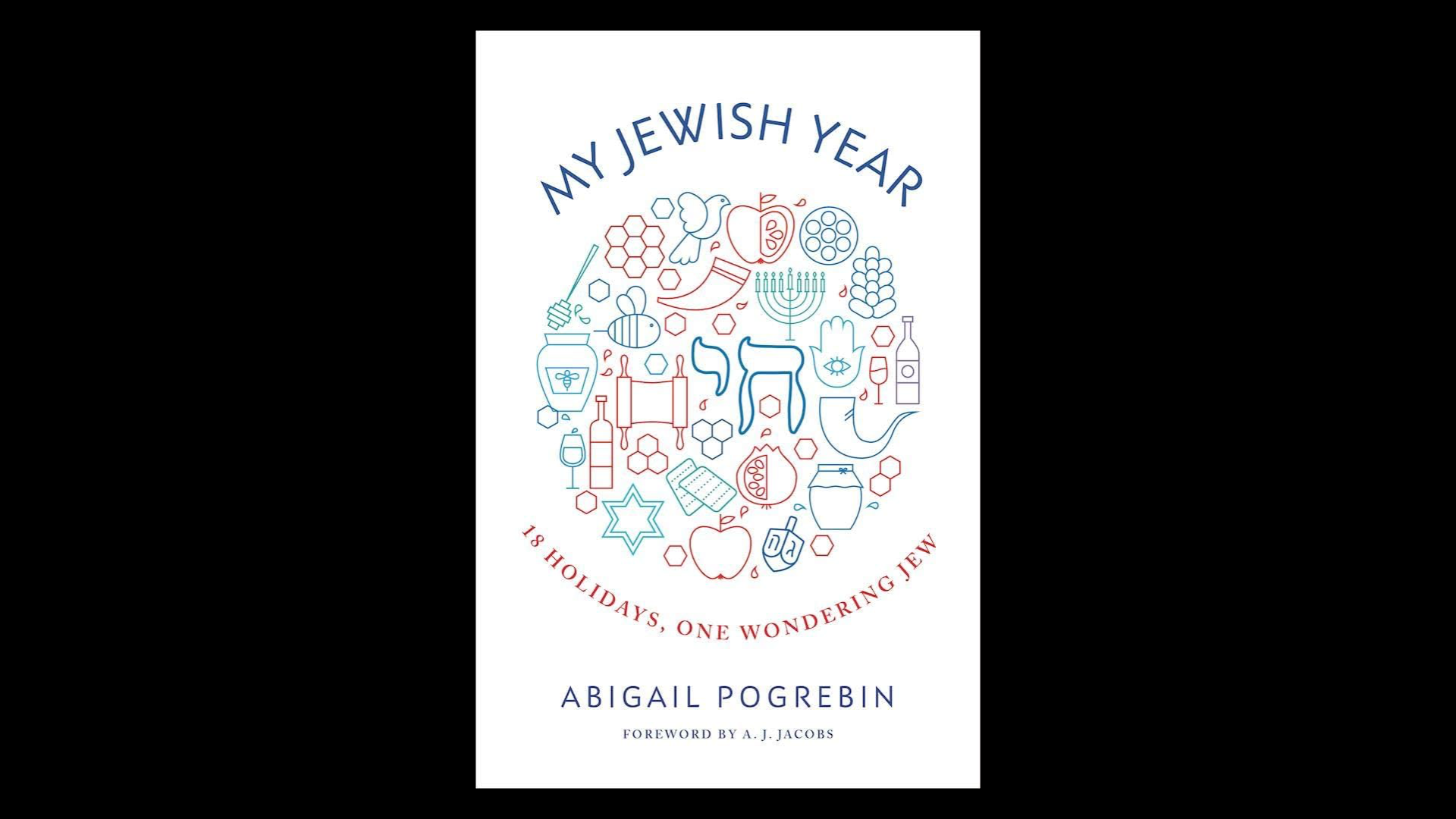
My Jewish Year:
18 Holidays, One Wandering Jew
Abigail Pogrebin - ISBN: 978-1941493205 - 2017
Author:
Abigail Pogrebin
Pogrebin is also the author of Stars of David: Prominent Jews Talk About Being Jewish, in which she discussed Jewish identity with 62 celebrated public figures ranging from Justice Ruth Bader Ginsburg to Steven Spielberg, from Mike Wallace to Natalie Portman. Pogrebin’s second book, One and the Same, about the challenges of twinship, is grounded in her own experience as half of an identical pair. Most recently, she published “Showstopper,” a bestselling Amazon Kindle Single that recalls her adventures as a 16-year-old cast member in the original Broadway production of Stephen Sondheim’s flop-turned-cult-favorite, “Merrily We Roll Along.”
Pogrebin’s articles have appeared in Newsweek, New York magazine, The Daily Beast, Tablet, and many other publications. Pogrebin was formerly a producer for Ed Bradley and Mike Wallace at CBS News’ 60 Minutes, where she was nominated for an Emmy. Before that, she produced for broadcasting pioneers Fred Friendly, Bill Moyers, and Charlie Rose at PBS.
A frequent speaker at synagogues and Jewish organizations around the country, Pogrebin has for seven years produced and moderated her own interview series at the JCC of Manhattan called “What Everyone’s Talking About.” Abigail Pogrebin lives in New York with her husband, David Shapiro, and their two teenage children.
Brief Synopsis:
In the tradition of The Year of Living Biblically by A. J. Jacobs and Walking the Bible: A Journey by Land Through the Five Books of Moses by Bruce Feiler comes Abigail Pogrebin's My Jewish Year, a lively chronicle of the author's journey into the spiritual heart of Judaism.
Although she grew up following some holiday rituals, Pogrebin realized how little she knew about their foundational purpose and contemporary relevance; she wanted to understand what had kept these holidays alive and vibrant, some for thousands of years. Her curiosity led her to embark on an entire year of intensive research, observation, and writing about the milestones on the religious calendar.
Whether in search of a roadmap for Jewish life or a challenging probe into the architecture of Jewish tradition, listeners will be captivated, educated, and inspired by Abigail Pogrebin's My Jewish Year.
Insights:
“Simchat Torah (rejoicing of the Torah) marks the day we complete the Torah and start it all over again. The last verses of the last book (Deuteronomy) are read, followed by the first verses of the first book (Genesis). It’s a clear snapshot of how we hold both the ending and the beginning in the same moment, not to mention that the ending never ends.”
“Contrary to the other three hundred days of the year, when you’re running and doing and building and constructing, the Jewish holidays provide a kind of in-built way to pause and to gather yourself and regenerate. . . . Our lives can become so full of activities and to-do tasks that, in some sense, the soul becomes overwhelmed. We need to defragment our souls. We can be pulled in so many different directions, but the holidays help that part of us that needs meaning and connection and great purpose. . . . Holiday rituals are ancient technologies that carry contemporary wisdom. Judaism works.”
“Other religions fast— Christians during Lent, Muslims during Ramadan, Hindus, Buddhists, Mormons, Eastern Orthodox. Reasons include asceticism, contemplation, penance, purification, resistance to gluttony, spiritual improvement, closeness to God. Jews add memory. We fast to remember. Tisha B'Av marks the mother lode of memorial, exceeding Yom HaShoah and Yom HaZikaron.”
“This holiday of Passover is indisputably oriented toward the younger generation. The Torah repeats and repeats: Tell it to the children. They'll grow up to be the tellers. When the children disengage, we've failed the mitzvah.”
Should I read it or skip it?
I picked up My Jewish Year for two reasons:
I wanted to understand the modern Jewish calendar. Over time, new holidays have been added to the list of Leviticus 23.
I wanted to see how a modern Jewish writer would approach the holidays that have shaped Jewish life for thousands of years.
Abigail Pogrebin is a writer, wife, daughter, and mom who invites readers into her own journey of rediscovering these celebrations, admitting upfront that she doesn't have all the answers. That honesty makes the book easy to enjoy. Along the way, she introduces readers to the traditions, history, and debates surrounding each holiday. Even when I disagreed with her conclusions, I appreciated her curiosity and the respect as she answers the question, “Does Jewishness matter to me and how does it shape my life?”
The line that stuck with me most was when she asked, "What do we hire a holiday to do for us?" It's a clever question given to her by a Rabbi. It makes you stop and think. But it also points to my biggest difference with the book. Pogrebin often explains the value of the holidays in terms of tradition, identity, community, or what they accomplish for the people who observe them. Those things matter, but I believe they're secondary. The biblical festivals weren't created because they were useful or meaningful — they were given by God. Our starting point should be "What has God revealed?" not "What does this do for me?" Understanding and obedience should come before utility. Tradition has value, but it should grow out of Scripture rather than replace it.
Even with that difference, I came away glad I read this book. It gave me a better appreciation for how many Jewish people think about their calendar today, and it pushed me to consider why modern-day Jews observe the biblical feasts. I'd recommend it to anyone who wants to understand contemporary Jewish practice — but I'd also encourage readers to keep their Bible open while they read. The traditions are interesting, the stories are engaging, and the questions are worth wrestling with. In the end, though, Scripture must remain the lens through which I want to understand God's appointed times.